Jesus is the Great Physician

Will our children inherit our values?

Matthew 9: 12-13: On hearing this, Jesus said, “It is not the healthy who need a doctor, but the sick. 13 But go and learn what this means: ‘I desire mercy, not sacrifice.’ For I have not come to call the righteous, but sinners.”

Jesus Great Physician

The Physician’s Prayer

category_50

Chief of Medical Staff

Type = ArtScans RGB : Gamma = 1.6

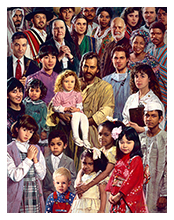
The Family of God

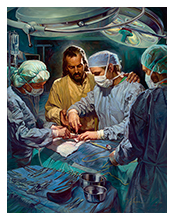
Nathan Greene is a freelance artist known for his Christian art and historical and geographic scenes. One of the most difficult assignments for an artist is to paint Jesus Christ because our image of the historical Jesus has been influenced by artists throughout history. Nathan Greene’s art illustrates the personality of Jesus as a picture of love, grace, and comfort. The paintings above are about Matthew 9:12-13.

The pastor, priest, artist, this blog writer attempts to translate Jesus into the realism of our daily lives. For people of faith, the presence of Jesus Christ with family, in times of serious illness or accident, and in the context of the big picture of the diversity of God’s presence in lives throughout history is one of comfort and confidence.

For people who lack faith, it is the words of Jesus in Matthew 9:12-13 that have deep meaning. The presence and love of God comes to us in His Holy Spirit when we need it the most because of sin, guilt, loneliness, and physical, mental, and emotional needs. The words of Matthew assure us that Jesus knows our name and He comes to us in different ways every day. But it is when we need a physician or Savior that we see His grace and love.

Martin Luther wrote in his commentary on Matthew 9:13, “Therefore, what He is saying is that it is His Father’s will that He should call sinners and not the righteous. He comes not to judge the world but to save the world (John 3:17) and this by the will of the Father.”

Jesus is saying, “I am calling sinners to repentance according to the forgiveness of sins, to make them righteous twice over, that is, by grace and in truth. (John 1:14,17). By grace, because their sins have been forgiven. In truth, because they are truly beginning to be good and to do good works.”

Repentance is putting sins to death! In forgiveness we are called to the continuous effort of recognizing the evil of hating, prejudice, judging, and separating ourselves from God. Our children will inherit our wealth when we die but we also want them to inherit our values – values of forgiveness, acceptance, love, grace, truth, justice, understanding the eternal promise of God and worshiping Him as Savior and Lord!

hbitten@reverendluther.org


Hymn Parade – I Know That My Redeemer Lives!

Hymn Parade – I Know that My Redeemer Lives by Samuel Medley (1865)

How does Jesus Christ change the way we understand life and people?

Job 19:25    I know that my redeemer lives, and that in the end he will stand on the earth.

Video: https://www.youtube.com/watch?v=qgY-da_w36Y

1 I know that my Redeemer lives; what comfort this sweet sentence gives! He lives, He lives, who once was dead; He lives, my everliving Head.

2 He lives triumphant from the grave, He lives eternally to save, He lives all-glorious in the sky, He lives exalted there on high.

3 He lives to bless me with His love, He lives to plead for me above, He lives my hungry soul to feed, He lives to help in time of need.

4 He lives to grant me rich supply, He lives to guide me with His eye, He lives to comfort me when faint, He live to hear my soul’s complaint.

5 He lives to silence all my fears, He lives to wipe away my tears, He lives to calm my troubled heart, He lives all blessings to impart.

6 He lives, my kind, wise, heav’nly friend, He lives and loves me to the end; He lives, and while He lives, I’ll sing; He lives, my Prophet, Priest, and King.

7 He lives and grants me daily breath; He lives and I shall conquer death; He lives my mansion to prepare; He lives to bring me safely there.

8 He lives, all glory to His name! He lives, my Jesus, still the same. Oh, the sweet joy this sentence gives, “I know that my Redeemer lives!”

Women-at-Tomb

Samuel Medley was introduced to the stories of the Bible by his grandfather but gave them little attention. It was during the Seven Years War (1756-1763, also called the French and Indian War in the Americas) when he was injured in a naval battle that he feared for his life. He prayed without stopping throughout the night that his leg would not need to be amputated and his life spared from death by infection. In the morning, his wound showed a miraculous sign of healing. He was retired from the military and attended a worship service at the Baptist Church on Eagle street and following a sermon he wrote the words to I Know that My Redeemer Lives! He opened a school and began a ministry to seamen.

Emma Smith composed the melody in 1835 and titled it “Duke Street,” which was his address in London.

Martin Luther, wrote: Aber ich weiß, daß mein Erlöser lebt, und als der letzte wird er über dem Staub sich erheben. Und ist meine Haut noch so zerschlagen und mein Fleisch dahingeschwunden, so werde ich doch Gott sehen.

 Ich selbst werde ihn sehen, meine Augen werden ihn schauen und kein Fremder. Danach sehnt sich mein Herz in meiner Brust.

Translation: But I know that my Redeemer lives, and as the last He will rise above the dust. And if my skin is still so broken and my flesh is gone, then I will see God.

I’ll see Him myself, my eyes will look at him and not a stranger. After that, my heart is yearning in my chest.

Comments: hbitten@reverendluther.org


Hymn Parade – When I Survey the Wondrous Cross

Hymn Parade: When I Survey the Wondrous Cross by Isaac Watts (1707)

 To what extent is the crucifixion of Jesus Christ the single most important event in world history?

Galatians 6:14     May I never boast except in the cross of our Lord Jesus Christ, through which the world has been crucified to me, and I to the world.

Video: https://www.youtube.com/watch?v=FQlJm-5_Ll4

  1. When I survey the wondrous cross On which the Prince of glory died, My richest gain I count but loss, And pour contempt on all my pride.
  2. Forbid it, Lord, that I should boast, Save in the death of Christ my God! All the vain things that charm me most, I sacrifice them to His blood.
  3. See from His head, His hands, His feet, Sorrow and love flow mingled down! Did e’er such love and sorrow meet, Or thorns compose so rich a crown?
  4. Were the whole realm of nature mine, That were a present far too small; Love so amazing, so divine, Demands my soul, my life, my all.

Isaac Watts (1674–1748) wrote hymns that reflected the theme of the sermon and in a poetic style that was ideal for congregational singing. Before Isaac Watts, hymns often supplemented the Psalms or based on the strict interpretation of Scripture. Isaac Watts is credited with writing 750 hymns! The hymn, When I Survey the Wondrous Cross is inspired by the most important event in human and personal history!

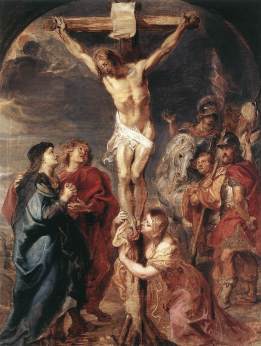
Peter_Paul_Rubens_-_Christ_on_the_Cross

Christ on the Cross was painted in 1627 by Peter Paul Rubens

In this painting, Jesus Christ is shown crucified on a cross with three women beneath him weeping with sympathy. Jesus is based in the center of the painting to clearly state the importance of His sacrifice and that the subject of this painting is religious. The use of darker colors makes the sacrifice of Jesus to appear as sympathetic and personal for the viewer. Imagine the impact of the perspective of this painting around the same time as the Pilgrims and Puritans were coming to Plymouth and Massachusetts Bay colony.

Martin Luther wrote in his commentary on Galatians 6:14: “But God forbid that I should glory, save in the cross of our Lord Jesus Christ. “God forbid,” says the Apostle, “that I should glory in anything as dangerous as the false apostles glory in because what they glory in is a poison that destroys many souls, and I wish it were buried in hell. Let them glory in the flesh if they wish and let them perish in their glory. As for me I glory in the Cross of our Lord Jesus Christ.”

He expresses the same sentiment in the fifth chapter of the Epistle to the Romans, where he (Paul) says: “We glory in tribulations”; and in the twelfth chapter of the Second Epistle to the Corinthians: “Most gladly, therefore, will l rather glory in my infirmities.” According to these expressions the glory of a Christian consists in tribulations, reproaches, and infirmities.

But the Cross of Christ is not to be understood here as the two pieces of wood to which He was nailed, because it is all the afflictions of the believers whose sufferings are Christ’s sufferings. Elsewhere Paul writes: “Who now rejoice in my sufferings for you, and fill up that which is behind of the afflictions of Christ in my flesh for his body’s sake, which is the church.” (Colossians 1:24)

It is good for us to know this lest we sink into despair when our opponents persecute us. Let us bear the cross for Christ’s sake. It will ease our sufferings and make them light as Christ says in Matthew 11:30, “My yoke is easy, and my burden is light.”

By whom the world is crucified unto me, and I unto the world. “The world is crucified unto me,” means that I condemn the world. “I am crucified unto the world,” means that the world in turn condemns me. I detest the doctrine, the self-righteousness, and the works of the world. The world in turn detests my doctrine and condemns me as a revolutionary heretic. Thus the world is crucified unto us and we unto the world.

In this verse Paul expresses his hatred of the world. The hatred was mutual. As Paul, so we are to despise the world and the devil. With Christ on our side we can defy him and say: “Satan, the more you hurt me, the more I oppose you.”

Comments: hbitten@reverendluther.org


Jesus Washes the Feet of His Disciples

Why do so many people consider a pedicure to be necessary?

John 13:1-17     It was just before the Passover Festival. Jesus knew that the hour had come for him to leave this world and go to the Father. Having loved his own who were in the world, he loved them to the end. The evening meal was in progress, and the devil had already prompted Judas, the son of Simon Iscariot, to betray Jesus. Jesus knew that the Father had put all things under his power, and that he had come from God and was returning to God; so he got up from the meal, took off his outer clothing, and wrapped a towel around his waist. After that, he poured water into a basin and began to wash his disciples’ feet, drying them with the towel that was wrapped around him.

He came to Simon Peter, who said to him, “Lord, are you going to wash my feet?”

Jesus replied, “You do not realize now what I am doing, but later you will understand.”

“No,” said Peter, “you shall never wash my feet.” Jesus answered, “Unless I wash you, you have no part with me.”

“Then, Lord,” Simon Peter replied, “not just my feet but my hands and my head as well!”

10 Jesus answered, “Those who have had a bath need only to wash their feet; their whole body is clean. And you are clean, though not every one of you.” 11 For he knew who was going to betray him, and that was why he said not everyone was clean.

12 When he had finished washing their feet, he put on his clothes and returned to his place. “Do you understand what I have done for you?” he asked them. 13 “You call me ‘Teacher’ and ‘Lord,’ and rightly so, for that is what I am. 14 Now that I, your Lord and Teacher, have washed your feet, you also should wash one another’s feet. 15 I have set you an example that you should do as I have done for you. 16 Very truly I tell you, no servant is greater than his master, nor is a messenger greater than the one who sent him. 17 Now that you know these things, you will be blessed if you do them.
Christ_Washing_the_Feet_of_His_Disciples-Tintoretto

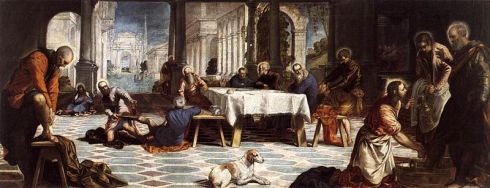
Christ Washing the Feet of His Disciples by Jacopo Tintoretto (1547)

This painting is from the wall of the 12th century church, San Marcuola in Venice. In the painting we also see the celebration of the Last Supper. The scene to the right of Jesus washing the feet of Peter and another disciple illustrates the example of humility and service to others. This work was acquired by King Charles I of England and later purchased by Luis de Haro, who gave it to King Felipe IV, who had it hung in the sacristy at El Escorial, where it remained until it entered the Prado Museum in 1936.

The fascinating part of this paining is that Jesus Christ, the Son of God, is washing the feet of his followers. What may be of even greater interest is that the other disciples in the background are also getting ready to have their feet washed. Their motivation had to be Jesus’ statement in verse 8 to Peter, “Unless I wash you, you have no part with me.” For Tintoretto and us, we know Jesus is not just washing feet but cleansing us of all our sins and imperfections of character. Jesus is also pictured as an ordinary person or as one who is also equal to us. A clear reference to Renaissance humanism or more specifically to the teaching of Martin Luther that Jesus Christ is both God and man.

Martin Luther preached in his Maundy Thursday sermon the importance of every Christian washing the feet of others!

“Again, we must understand by the term “feet-washing” a disposition which not only willingly serves others in a humble spirit, but which is also ready to forgive the failings of the brethren, as St. Paul says: “Bear ye one another’s burdens.”

We are often inclined to think: If only our neighbor had not this or that failing, we would gladly associate with him; but his many faults seem to us insufferable and repulsive. Let us bear in mind, whenever we observe such shortcomings in our husband, wife, child, servants, neighbors and others, that we have an excellent occasion for feet-washing. Let us do it then; that is, let us bear with mildness such infirmities, and seek to relieve others of them, always aware that this world is really a filthy cesspool, which we cannot pass without soiling our feet. This happens to me and to you, and to everyone. Should we therefore run away into deserts and solitudes, and associate with no one, as formerly the monks did? No, it is a Christian duty to wash the feet of others, we must stay where they are. We must be among the people who wade through unclean, filthy places. We must unbend our proud reserve, and though our feet should be clean and pretty, it behooves us to carry water, rags, soap and brush to cleanse and wash the feet of those who need such ablution.

To do this we must obey the word of the Apostle and “bear one another’s burdens”; we must right willingly assist the weak and needy, exercise patience and compassion, give them our hand for a support, and instruct and guide them to a purer and better life. If we are prudent, wise and learned, we ought therefore not to despise the simple and silly, but should so much the more exercise our skill to help them and to improve their condition. If we are pious, chaste and temperate let us not judge others harshly who have not such virtues, but let us strive to turn them from their evil way and lead them to do what is right. If we have not the faults which we notice in our brother, let us thank God that it is so; but at the same time we must not forget that we may have other failings which need patience and assistance from others. On the other hand, our neighbors have gifts with which they can help us in our infirmities; and even if they should be unable to help us even in the least, they are still our neighbors, whom we should treat with Christian love, as God has commanded us. Let harmony and friendship prevail among us as much as possible, and to this end let us exercise the spirit of humility.

What a pleasant, quiet, Christian life we could lead, if we would only be ready ever to wash each other’s feet! The one would assist and defend the other; we would all exercise patience and mildness and have no other aim but to make each other happy. Then might we be comforted by the assurance that we had, to some extent at least, complied with the command of Christ, and might appropriate the word of our Lord: “If ye know these things, happy are ye if ye do them.” But if we are derelict in the performance of our duty in this regard, we will feel a piercing sting in our hearts and be unhappy people, devoid of grace and joy.

From this we learn what this feet-washing means; it teaches a humble, friendly and Christ-like spirit, which Christians should, under all circumstances, manifest in their intercourse with each other. The Lord desires to direct our thoughts to the necessity of humility and condescension ; therefore He performed this ceremony of feet-washing shortly before His death. No matter what our ability may be, we dare not boast on account of our great endowments, but must reason thus: By giving us greater gifts than others, God meant that we should employ them in the service of others, and that we should cultivate so much the more a spirit of lowliness, and thrust the devil aside with his promptings to pride and arrogance.

The Lord, however, wishes to teach us, just here, another and more important lesson in regard to His person. When Peter refuses to be washed, Jesus answers him: “If I wash thee not, thou hast no part with Me.” In these words Christ refers not to the external washing of the feet, but to the washing from sin by His blood shed upon the cross, which washing still is efficacious among the believers in the Sacrament of Holy Baptism. Such washing is no example; for we can cleanse neither ourselves nor others from sin. The Son of God, the Lamb of God, who bore the sins of the world, can do it, and He alone. They who are washed of Christ confess that God in mercy, through His Son, pardoned and forgave their sins, and therefore they are ready to forgive the wrong which others may have done unto them, as Christ teaches in Matthew 18 and as we pray in the Lord’s Prayer: “Forgive us our trespasses as we forgive those who trespass against us.”

It is therefore evident that we should practice this feet-washing during our whole life. Amen.

Comments: hbitten@reverendluther.org


Jesus Enters Jerusalem on Palm Sunday

Jesus Enters Jerusalem on Palm Sunday

What question would you ask Jesus if you saw Him?

Matthew 21: 1-11   As they approached Jerusalem and came to Bethphage on the Mount of Olives, Jesus sent two disciples, saying to them, “Go to the village ahead of you, and at once you will find a donkey tied there, with her colt by her. Untie them and bring them to me. If anyone says anything to you, say that the Lord needs them, and he will send them right away.”

This took place to fulfill what was spoken through the prophet: “Say to Daughter Zion, ‘See, your king comes to you, gentle and riding on a donkey, and on a colt, the foal of a donkey.’”

The disciples went and did as Jesus had instructed them. They brought the donkey and the colt and placed their cloaks on them for Jesus to sit on. A very large crowd spread their cloaks on the road, while others cut branches from the trees and spread them on the road. The crowds that went ahead of him and those that followed shouted,

“Hosanna to the Son of David!” “Blessed is he who comes in the name of the Lord!”

“Hosanna in the highest heaven!” 10 When Jesus entered Jerusalem, the whole city was stirred and asked, “Who is this?”   11 The crowds answered, “This is Jesus, the prophet from Nazareth in Galilee.”

Giotto Entry into Jerusalem

The Entry into Jerusalem by Giotto di Bondone (1305)

The Entry into Jerusalem is told in detail in all four gospels indicating its importance for Jesus and our salvation. Although this may not be the most descriptive painting of Palm Sunday, it reminds me of the importance of continuity over time as this fresco was painted over 700 years ago! The historical evidence of Holy Week is in the documented love and grace of Jesus Christ!

Jesus is the center and His face is filled with peace and reflection as the crowds to the left rip off branches and take off their outer garments. This moment is not about Jesus but it is all about the people – the apostles on the left who believed Jesus as their Savior and those on the right who are looking for a savior. The artist is aware of the violent death Jesus will face in a few days. We see the reaction of Martin Luther below in his commentary on Palm Sunday as the people asked: “Who is this?”

Martin Luther’s perspective is one that is likely to appear shocking to us in the 21st century because they should have known who Jesus is! “Therefore, it is truly a disgraceful question when they ask who He is in Matthew 21:10, as if they did not know Him and as if the temple, the city, and everything belonged to them. He answers them with a question, however, and sets before them John the Baptist. He asks them where John’s Baptism is from. The common people and children give them a fine answer and say: ‘Have you not heard of John’s testimony? This is Jesus, the prophet from Galilee’ in Matthew 21:11.

They have to fall silent. They cannot allow themselves to answer Christ’s question by saying that John the Baptist’s Baptism is from men, for the people regarded him as a prophet (v. 26) And as they say here: “The prophet comes from Galilee.” (verse 11). The people say, ‘He is Jesus, the prophet.’ And the very word ‘prophet’ is for them like a clap of thunder. This was not to be trifled with, for the people believed that a prophet held the highest authority in spiritual matters. Whatever he might order of command must be done….

For the Lord did not ride in to stir up a revolt or to usurp the government , but He did want to clean out and reform the temple. (Matthew 21: 12-17) And for that reason He attacks only those who are in the spiritual government, to which He was called, and enters the temple as the true Messiah and Lord.”

Comments: hbitten@reverendluther.org
 

Hymn Parade – It Is Well With My Soul

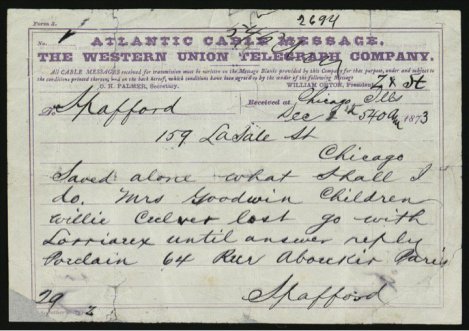
It is Well with My Soul by Horatio Spafford (1873)

When things fall apart, who do you go to for help?

(Perhaps a word of comfort to everyone who loses a loved one through a tragic accident act of violence, or natural death. Time is a human invention; our soul is the miracle of God’s creation!!!)

When peace like a river, attendeth my way / When sorrows like sea billows roll / Whatever my lot, Thou hast taught me to know / It is well, it is well, with my soul. https://www.youtube.com/watch?v=vJ4p_L992D4

Psalm 46: 1-3:   God is our refuge and strength, an ever-present help in trouble. Therefore we will not fear, though the earth give way and the mountains fall into the heart of the sea, though its waters roar and foam and the mountains quake with their surging.

Horatio Spafford was a prominent lawyer and businessman in Chicago at the time of the Civil War and presidency of Abraham Lincoln in the 1860s. They faced emotional and spiritual challenges in the 1870s as their son died of scarlet fever at the age of four and the Chicago fire destroyed all of their property along Lake Michigan. The Spaffords planned a family trip to London to get away from their troubles in November 1873.

It is Well With My Soul

Unfortunately, Horatio Spafford stayed in New York for an unexpected business situation.  In the Atlantic their ship “Ville de Havre” collided with the English vessel “The Lochearn” and sank within 12 minutes claiming 226 lives, including Horatio Spafford’s four daughters. His wife survived. Horatio boarded the next ship to London and when the captain notified him of the probable location of the tragedy, he composed the lyrics to this hymn. Romans 8:31-39 is also referenced in this hymn.

Martin Luther was also inspired to write the hymn, “A Mighty Fortress is Our God” by the words of Psalm 46. We sing this hymn because God is with us and He defends and preserves us against all hatred, struggles, and sin. In our hour of trial we turn to God who loves us and comforts us!!!

Comments: hbitten@reverendluther.org



The Temptation of Christ

Do temptations always test our faith?

Matthew 4: 1-11: Then Jesus was led by the Spirit into the wilderness to be tempted by the devil. After fasting forty days and forty nights, he was hungry. The tempter came to him and said, “If you are the Son of God, tell these stones to become bread.”

Jesus answered, “It is written: ‘Man shall not live on bread alone, but on every word that comes from the mouth of God.’”

Then the devil took him to the holy city and had him stand on the highest point of the temple. “If you are the Son of God,” he said, “throw yourself down. For it is written: “‘He will command his angels concerning you, and they will lift you up in their hands, so that you will not strike your foot against a stone.’”

Jesus answered him, “It is also written: ‘Do not put the Lord your God to the test.’”

Again, the devil took him to a very high mountain and showed him all the kingdoms of the world and their splendor. “All this I will give you,” he said, “if you will bow down and worship me.”

10 Jesus said to him, “Away from me, Satan! For it is written: ‘Worship the Lord your God, and serve him only.’” 11 Then the devil left him, and angels came and attended him.

temptations-of-christ

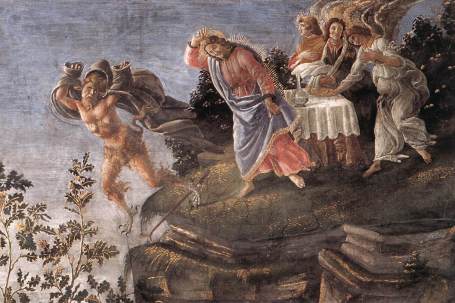
The Temptations of Christ Fresco in Sistine Chapel 1480-1482 by Sandro Botticello

The Temptations of Christ depicts three scenes from the gospels. The story takes place in the midst of people rather than in the isolation of the desert. This application about sin and temptation in our daily lives would speak directly to the hearts of the people and to the clergy in the Sistine Chapel as it calls for repentance.

On the left, Jesus who has been fasting, is confronted by Satan who is disguised as a hermit, to turn the stones in the desert to bread. The second scene in the close-up below, Satan tempts Jesus to challenge God’s promise that the angels will protect Him. He tempts Jesus to jump from the cliff. In the third scene, Satan promises Jesus all the beauties and wealth of the world if He will deny God.

Temptation in Detail-Sandro_Botticelli

Close-up view of the upper right section of the painting

Luther, in his sermon in 1525 during the Peasants’ Revolt said: “But in spiritual matters this temptation is powerful when one has to do with the nourishment not of the body but of the soul. Here God has held before us the person and way, by which the soul can be forever nourished in the richest manner possible without any want, namely Christ, our Savior. But this way, this treasure, this provision no one desires. Everybody seeks another way, other provisions to help their souls.

The real guilty ones are those who would be saved through their own work; these the devil sets conspicuously on the top of the temple. They follow him and go down where there is no stairway; they believe and trust in their own work where there is no faith nor trust, no way nor bridge, and break their necks. But Satan makes use of and persuades them through the Scriptures to believe that the angels will protect them, and that their way, works and faith are pleasing to God, and who called them through the Scriptures to do good works; but they do not care how falsely they explain the Scriptures.

Who these are, we have identified often enough and very fully, namely, work righteous persons and unbelieving hypocrites under the name of being Christians and among the congregation of Christian people. For the temptation must take place in the holy city and one temptation is seldom against another.

In the first temptation want and hunger are the reasons that we should not believe; and by which we become anxious to have a full sufficiency, so that there is no chance for us to believe.

In the second temptation, however, the abundance and the full sufficiency are the reasons that we do not believe, by which we become tired of the common treasure, and every one tries to do something through his own powers to provide for his soul. So we do; if we have nothing, then we doubt God and believe not; if we have abundance, then we become tired of it and wish to have something different, and again we fail to believe. There we flee and turn against want and seek abundance: here we seek want and flee from the abundance we have. No, whatever God does for us, is never right. Such is the bottomless, wickedness of our unbelief.”

Comments: hbitten@reverendluther.org
 

The Parable of the Workers in the Vineyard

How are wages, wealth, and inheritance understood in this story?

 Matthew 20:1-16  “For the kingdom of heaven is like a landowner who went out early in the morning to hire workers for his vineyard. He agreed to pay them a denarius for the day and sent them into his vineyard.

“About nine in the morning he went out and saw others standing in the marketplace doing nothing. He told them, ‘You also go and work in my vineyard, and I will pay you whatever is right.’ So they went.

“He went out again about noon and about three in the afternoon and did the same thing. About five in the afternoon he went out and found still others standing around. He asked them, ‘Why have you been standing here all day long doing nothing?’

“‘Because no one has hired us,’ they answered. “He said to them, ‘You also go and work in my vineyard.’

“When evening came, the owner of the vineyard said to his foreman, ‘Call the workers and pay them their wages, beginning with the last ones hired and going on to the first.’

“The workers who were hired about five in the afternoon came and each received a denarius. 10 So when those came who were hired first, they expected to receive more. But each one of them also received a denarius. 11 When they received it, they began to grumble against the landowner. 12 ‘These who were hired last worked only one hour,’ they said, ‘and you have made them equal to us who have borne the burden of the work and the heat of the day.’

13 “But he answered one of them, ‘I am not being unfair to you, friend. Didn’t you agree to work for a denarius? 14 Take your pay and go. I want to give the one who was hired last the same as I gave you. 15 Don’t I have the right to do what I want with my own money? Or are you envious because I am generous?’ 16 “So the last will be first, and the first will be last.”

This Gospel reading is traditionally read in churches on the third Sunday before Ash Wednesday, which is also the ninth Sunday before Easter. (Septuagesima Sunday) It tells us that we are all sinners and in need of the Grace of Jesus Christ!

Rembrandt_-_Parable_of_the_Laborers_in_the_Vineyard

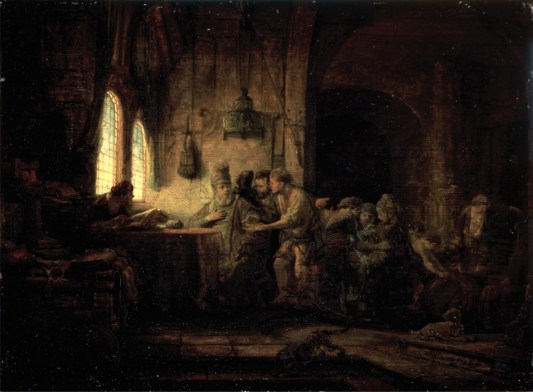
The Parable of the Laborers in the Vineyard by Rembrandt (1637)

Rembrandt uses darkness to engage the viewer in this scene of two laborers arguing with the landlord about their pay as the workers to the right talk among themselves. The wife of the landlord is the accountant and sits at the table with the open ledger book. This parable is only found in the Gospel of Matthew (a former tax collector) a landowner is paying his workers at the end of the day. The controversy developed when the workers who labored all day received the same wages as part time workers who worked for only a few hours. The perspective Rembrandt creates is for the viewer to look at the scene from the outside, perhaps through a window. This painting is at The Hermitage in St. Petersburg, Russia.

The excerpt below is from a sermon Martin Luther preached on Septuagesima Sunday in 1528, the third Sunday before Ash Wednesday and the ninth Sunday before Easter.

“Hence the substance of the parable in today’s Gospel consists not in the penny, what it is, nor in the different hours; but in earning and acquiring, or how one can earn the penny; that as here the first presumed to obtain the penny and even more by their own merit, and yet the last received the same amount because of the goodness of the householder. Thus God will show it is nothing but mercy that He gives and no one is to arrogate to himself more than another. Therefore He says I do thee no wrong, is not the money Mine and not thine; if I had given away thy property, then thou wouldst have reason to murmur; is it not lawful for me to do what I will with mine own ?

Now in this way Christ strikes a blow first against the presumption of those who would storm their way into heaven by their good works; as the Jews did and wished to be next to God; as hitherto our own clergy have also done. These all labor for definite wages, that is, they take the law of God in no other sense than that they should fulfill it by certain defined works for a specified reward, and they never understand it correctly, and know not that before God all is pure grace. This signifies that they hire themselves out for wages, and agree with the householder for a penny a day; consequently their lives are bitter and they lead a career that is indeed hard.

Now when the Gospel comes and makes all alike, as Paul teaches in Romans 3:23, so that they who have done great works are no more than public sinners, and must also become sinners and tolerate the saying: “All have sinned”, Romans 3:23, and that no one is justified before God by his works; then they look around and despise those who have done nothing at all, while their great worry and labor avail no more than such idleness and reckless living. Then they murmur against the householder, they imagine it is not right; they blaspheme the Gospel, and become hardened in their ways; then they lose the favor and grace of God, and are obliged to take their temporal reward and trot from him with their penny and be condemned; for they served not for the sake of mercy but for the sake of reward, and they will receive that and nothing more, the others however must confess that they have merited neither the penny nor the grace, but more is given to them than they had ever thought was promised to them. These remained in grace and besides were saved, and besides this, here in time they had enough; for all depended upon the good pleasure of the householder.”

Comments: hbitten@reverendluther.org

The Wise Men Visit Jesus

The Visit of the Kings

Is God visible or invisible in our lives and world?

Matthew 2:1-12: After Jesus was born in Bethlehem in Judea, during the time of King Herod, Magi from the east came to Jerusalem and asked, “Where is the one who has been born king of the Jews? We saw his star when it rose and have come to worship him.”

When King Herod heard this he was disturbed, and all Jerusalem with him. When he had called together all the people’s chief priests and teachers of the law, he asked them where the Messiah was to be born. “In Bethlehem in Judea,” they replied, “for this is what the prophet has written:

“‘But you, Bethlehem, in the land of Judah,     are by no means least among the rulers of Judah; for out of you will come a ruler     who will shepherd my people Israel.’”

Then Herod called the Magi secretly and found out from them the exact time the star had appeared. He sent them to Bethlehem and said, “Go and search carefully for the child. As soon as you find him, report to me, so that I too may go and worship him.”

After they had heard the king, they went on their way, and the star they had seen when it rose went ahead of them until it stopped over the place where the child was. 10 When they saw the star, they were overjoyed. 11 On coming to the house, they saw the child with his mother Mary, and they bowed down and worshiped him. Then they opened their treasures and presented him with gifts of gold, frankincense and myrrh. 12 And having been warned in a dream not to go back to Herod, they returned to their country by another route.

Opnamedatum: 2010-02-18

Adoration of the Kings, by Hendrik ter Brugghen (1619)

The richly garbed kings are full of reverence as they offer their gifts with the young toddler, Jesus, grasping at the gifts as all babies do. Brugghen suggests the wise men or kings knew the importance of the birth of Jesus. Jesus will be the savior of all nations and people!

Martin Luther: In his 1522 sermon for Epiphany, Luther used the example of the Magi to emphasize that the priests and educated of Israel knew the Scriptures but failed to understand and assimilate them. Instead they allowed a foreign king, Herod, to cultivate their fear and dismiss this as fake news. Luther ponders that even if they believed God’s Word on the prophecy of a savior as truth, they frustrated it.

Instead, the Magi were prepared to leave their homes and possessions and search for the birthplace of Jesus Christ. They studied the Scriptures and recognized the star. When they arrived in Jerusalem they did not ask for Annas or Caiaphas, priests, or an address. They asked where they would find the King of the Jews! Luther concluded that God works in opposites, He appears in unlikely places, with ordinary people, and hidden from what we might expect. (Robert Kolb. Luther and the Stories of God, p. 129)

“From this we can easily conclude why Christ had to die and rise again in order to rule spiritually to all eternity. For though the passage here proves that He had to become a true natural man, it yet follows that He had to change this bodily life into a spiritual invisible life, as it was impossible for Him to rule bodily as widely and as long as the prophet indicates.

Micah continues and says: “Therefore will he give them up until the time that she which travaileth hath brought forth: then the residue of his brethren shall return unto the children of Israel. And he shall stand and shall feed his flock in the strength of the Lord, in the majesty of the name of the Lord his God: and they shall abide; for now shall he be great unto the ends of the earth.”

From these words it is clear that Christ’s kingdom should be extended to the ends of the earth by preaching and suffering, of which the prophet says that in the majesty of the name of Jehovah He would preach and feed his flock, showing also that He would be persecuted on account of his preaching. Therefore the prophet also says that they should be given a respite as to their temporal existence and government until a new people had been born. The woman in travail represents the little flock of the apostles which during the sufferings of Christ was in the agony of the birth of a new spiritual people for this ruler of Israel, as Christ Himself foretells, John 16:2. “Then Herod privately called the Wise-men, and learned of them exactly what time the star appeared. And he sent them to Bethlehem and said, Go and search out exactly concerning the young child; and when ye have found Him, bring me word, that I also may come and worship Him.”

From this text we learn that the wise men were not kings nor princes, but common, honest people, like the learned and the clergy. Herod does not treat them as belonging to royalty, but sends them to Bethlehem, tells them to attend to their mission, and, as if they were his subjects, commands them to bring him word again. He would not have done this if they had been kings or lords; he would have invited them to his palace, accompanied them on their journey, and treated them with great honor. For all historians agree that Herod was a pompous man, who knew how to treat people royally after the way of the world, and wished to be admired by the people.

As, however, he calls the men privately and without display and parade they must have been of much lower rank than he was.

But why does he call them privately, since the land was his and in his full control? He did it for this reason. He knew quite well that the Jews were his sworn enemies and wished to be rid of him. He was afraid, therefore, that if he called the men publicly and the Jews became aware of it, they would go to the wise men and enjoin them not to acquaint Herod with the true state of affairs, so that the new king may live before his eyes.

When he asks them about the time of the star he does it out of the same anxiety. He was already resolved in his heart to slay the innocent children.

He reasoned thus: If the new king is born the Jews will rejoice, and will secrete him for a while until he is grown up, and then will espouse his cause, put him on the throne and banish me. I must forestall them, therefore, and carefully inquire into the time of His birth; and although He is hidden from me I shall still find Him amongst the people when I slay all the children, and their disguise will avail them nothing. He pursues this plan diligently so that the new king might be made known to him, commands the wise men to bring him word again, and puts on a pious and devout face as if he wished to worship the child also.”

Comments: hbitten@reverendluther.org
Massacre of Innocents PP Rubens 1609-11Massacre of the Innocents by Peter Paul Rubens (1609-1611)

Hymn Parade – Away in a Manger

Hymn Parade – Away in a Manger (1882)

How do you see the face of Jesus – as a baby, man, friend, Savior?

 Luke 2:7 And she brought forth her firstborn son, and wrapped him in swaddling clothes, and laid him in a manger; because there was no room for them in the inn.

Away in a manger, no crib for a bed, the little Lord Jesus laid down His sweet head; the stars in the sky looked down where He lay, the little Lord Jesus, asleep on the hay.

The cattle are lowing, the Baby awakes, but little Lord Jesus, no crying He makes; I love Thee, Lord Jesus! Look down from the sky, and stay by my cradle till morning is nigh.

 Be near me, Lord Jesus, I ask Thee to stay close by me forever, and love me, I pray; bless all the dear children in Thy tender care, and fit us for heaven, to live with Thee there.”

Video: https://www.youtube.com/watch?v=pVSoAM7YrxE

Although many have credited Martin Luther with “Away in a Manager” as his “Cradle Song” it is unlikely that he actually wrote this song since there is no known copy written in German. However, the carol came to America through Lutheran immigrants who settled in Pennsylvania. It was first published in March 1882 in The Christian Cynosure under the heading of “Luther’s Cradle Song” and identified as the song Martin Luther sang to his children. The musical setting is also debated between the most common one composed by William J. Kirkpatrick in 1895 and the one by James Ramsey Murray in 1887.

Christmas became America’s third national holiday (after Independence Day and Thanksgiving Day) in 1870. After the Civil War, Americans looked for a holiday that would unite everyone and the symbols of decorated Christmas trees, wrapped gifts, Santa Claus, cards, carols, nativity pageants, and the theme of the gift of salvation emerged in American culture. There was a strong religious expression in this holiday which united the people in America’s growing cities and rural communities. Away in a Manger is considered to be an American song! The song became very popular in Sunday School and public school programs for Christmas.

Adoration of the Shepheds-1622The Adoration of the Shepherds by Gerard van Honthorst (1622)

The following excerpt is from Martin Luther’s Christmas Day sermon in 1522.

“But the birth itself is still more pitiful. There was no one to take pity on this young wife who was for the first time to give birth to a child; no one to take to heart her condition that she, a stranger, did not have the least thing a mother needs in a birth-night. There she is without any preparation, without either light or fire, alone in the darkness, without any one offering her service as is customary for women to do at such times. Everything is in commotion in the inn, there is a swarming of guests from all parts of the country, no one thinks of this poor woman. It is also possible that she did not expect the event so soon, else she would probably have remained at Nazareth.

Just imagine what kind of swaddling clothes they were in which she wrapped the child. Possibly her veil or some article of her clothing she could spare. But that she should have wrapped him in Joseph’s trousers, which are exhibited at Aix-la-Chapelle, appears entirely too false and frivolous. It is a fable, the like of which there are more in the world. Is it not strange that the birth of Christ occurs in cold winter, in a strange land, and in such a poor and despicable manner?

Some argue as to how this birth took place, as if Jesus was born while Mary was praying and rejoicing, without any pain, and before she was conscious of it. While I do not altogether discard that pious supposition, it was evidently invented for the sake of simple minded people. But we must abide by the Gospel, that he was born of the virgin Mary. There is no deception here, for the Word clearly states that it was an actual birth.”

It is well known what is meant by giving birth. Mary’s experience was not different from that of other women, so that the birth of Christ was a real natural birth, Mary being his natural mother and he being her natural son. Therefore her body performed its functions of giving birth, which naturally belonged to it, except that she brought forth without sin, without shame, without pain and without injury, just as she had conceived without sin. The curse of Eve did not come on her, where God said: “In pain thou shalt bring forth children,” Genesis 3:16; otherwise it was with her in every particular as with every woman who gives birth to a child.

Grace does not interfere with nature and her work, but rather improves and promotes it. Likewise Mary, without doubt, also nourished the child with milk from her breast and not with strange milk, or in a manner different from that which nature provided, as we sing: ubere de coelopleno, from her breast being filled by heaven, without injury or impurity. I mention this that we may be grounded in the faith and know that Jesus was a natural man in every respect Just as we, the only difference being in His relation to sin and grace, He being without a sinful nature. In him and in His mother nature was pure in all the members and in all the operations of those members. No body or member of woman ever performed its natural function without sin, except that of this virgin; here for once God bestowed special honor upon nature and its operations. It is a great comfort to us that Jesus took upon Himself our nature and flesh. Therefore we are not to take away from Him or His mother any thing that is not in conflict with grace, for the text clearly says that she brought him forth, and the angels said, unto you he is born.”

Comments: hbitten@reverendluther.org